
LAZARUS

One of the common mistakes I see hurting people make is rushing the process of pain and being all too hasty to convince the world and themselves that theyโ€™re fine. Everything is fine. In the Christian community, we tend to offer hopeful platitudes and plaster a forced smile on our faces. I like to refer to this as โ€œslapping a Jesus sticker on it.โ€ Weโ€™ve convinced ourselves that admitting hurt or grief somehow diminishes our proclamation of faith in a good God. 

While I will always point to Jesus and the hope I have in Him, I believe that acknowledging our pain, sitting with it a while, and opening up about it is not only healthy, itโ€™s biblical. Donโ€™t believe me? Read through the book of Psalms. Poem after poem written as laments โ€” giving shape to loss, pain, anguish โ€” universal parts of the human experience. God welcomed these psalms and the expression of pain because their writers were bringing their hurts to God, not turning from Him because of them. 

Jesus took on flesh to live a fully human experience like we do. Part of that experience meant encountering loss. In the gospel of John, we read the account of the death of Jesusโ€™s good friend, Lazarus. We also witness the rise and fall of Maryโ€™s and Marthaโ€™s (Lazarusโ€™s sisters) emotions as they sent word to Jesus for help when Lazarus got sick and were devastated when He arrived โ€œtoo lateโ€ to save their brother. Little did they know that Jesus came to conquer death and was about to raise their beloved brother from the grave. However, the Bible tells us โ€œwhen Jesus saw [Mary] weeping, and the Jews who had come with her also weeping, he was deeply moved in his spirit and greatly troubled . . . Then Jesus wept.โ€ (John 11: 33, 35). 

Jesus knew the end of the story. He knew Lazarus was not going to stay in that grave. He was full of hope and held the very keys to that hope. Yet, He too, wept.  In that moment, Jesus acknowledged the sting of death, loss, and grief. He wept not only over the death of His friend, but possibly more so for the anguish Lazarusโ€™s death left in its wake. Jesus stepped into Maryโ€™s and Marthaโ€™s agony and sat with them in their pain. He didnโ€™t say, โ€œGet it together girls! Itโ€™s going to be fine. Itโ€™s all going to work out, youโ€™ll see!โ€ Jesus knew the good that was to come but still gave grief its moment. I imagine Him pulling Mary and Martha into a warm embrace, weeping with them, and not rushing this moment because He was showing them that He was there with them through it all, the highs and the lows. 

I have felt Jesus do the same for me. I have wept on His shoulder more times than I can count. I know the end of the story. I know it is good. I know Jesus is victorious and I will see that fully realized one day. But, on this side of heaven, there is still loss. I take such comfort in knowing God sees me in my moments of pain and meets me there. I take comfort in the God who weeps with me. 

Below, Iโ€™ve included a piece I wrote in the spring of 2024 during a season of loss.  A seemingly small loss, but it represents one more layer of what disability has taken from us and it hurts. I share this with the hopes of encouraging you to not rush through your seasons of hurting. There is always hope. There will be brighter days. But Jesus is with you on the dark days too. 


Lazarus died today. 

Limb by limb, he was hacked apart. More like snapped apart. His brittle branches detached without protest, unceremoniously clattering to the ground like a pile of dry bones.

Only his trunk took some work. It was the only part of him that had any life left. Even then, the chainsaw sliced through over 20 thick rings of life in mere minutes. What once stood tall and mighty, now lay lifeless on the earth. 

Lazarus wasnโ€™t the only thing that died today. 

A little piece of childhood died, too. 

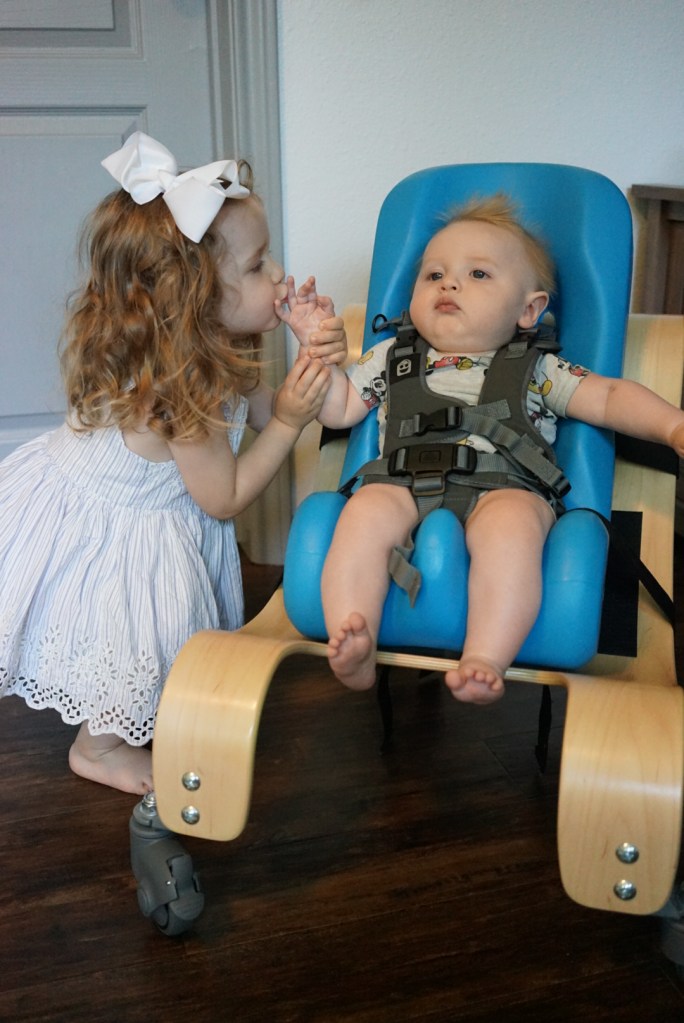
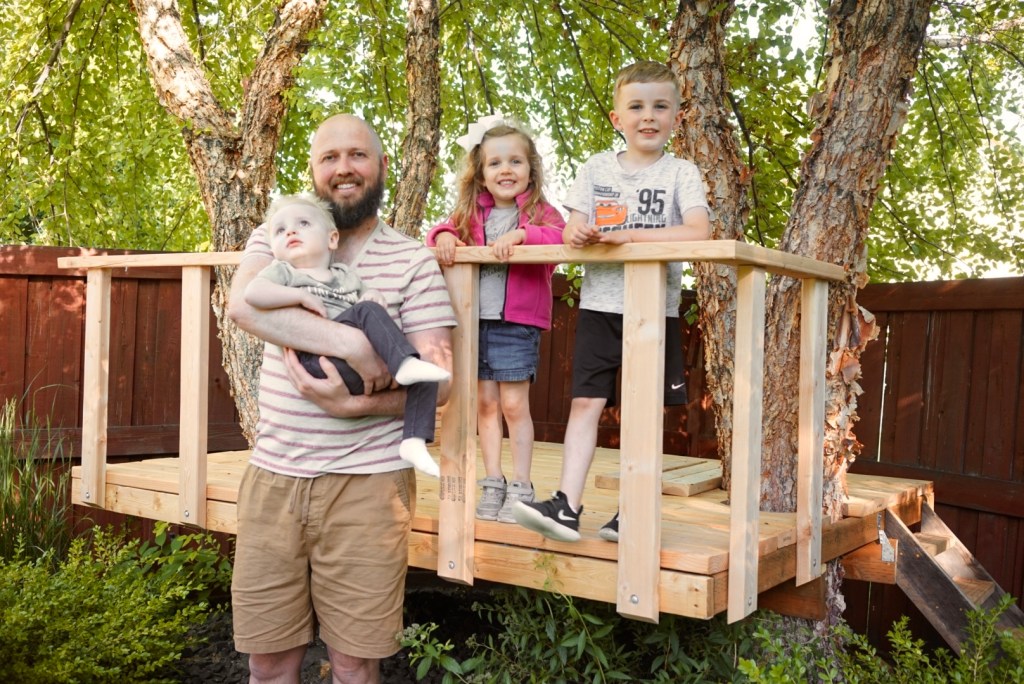
We left behind even more trees at our last home. Three whimsical River Birches and a sturdy Maple that stretched proudly toward the sky. The birches were home to a tree house that was home to the wild imagination of a little boy and little girl. The maple was the boyโ€™s favorite climbing tree. We left them all behind to find a home for another little boy who would never climb any trees. 

Our new home had Lazarusโ€”a tall old Tulip Tree with a spherical canopy. Our only hope. We learned he was sick right away. Barren branch after barren branch where luscious leaves should be. We named him Lazarus and started praying life over him. 

Mary and Martha waited four days for their Laz to return. We waited 400. But ours did not return to the land of the living. We made the call to let him go in peace. 

There would be no trees for my children to climb. No miniature wilderness to be explored by curious young minds. Lazarusโ€™s untimely departure only served to expedite fleeting seasons of childhood.  

Lazarus wasnโ€™t the only thing that died today. 

A small corner of paradise died too. 

At our last home, the branches of the birches and maple touched, creating a perfect canopy of green. We hung a hammock between the two trees and rested in its embrace. Hours were spent thereโ€“swaying, snuggling, reading, laughing, crying, listening to the whisper of wind as it rustled through leaves. That very spot, perfectly shaded in every season shielded us from the sun, but also from lifeโ€™s burdens. Our peace banana, as we called it, strung between two majestic trees, was solace for the weary. Respite in the midst of shattering pain. 

Our new home had only Lazarus to fill that void. Half of what was needed to recreate our slice of paradise. We settled for using an awning post where a second tree should be. We swung in our hammock beneath a sparse canopy that scarcely filtered the beating sun and tried not to think of what we left behind. And now, even Laz is gone. Our paradise is lost. 

We are planting a new tree in Lazโ€™s place. A baby. Young, but full of promise. One day, Iโ€™ll write about how the Sienna Glen reaches to the heavens. And how its leaves shade our yard in summer and burn like fire in fall. One day, Iโ€™ll write about how its limbs give my grandchildren a place to climb and play. 

But not today. Today I remember and honor what had to die to make room for new life.

ROME

As Christmas draws near, my thoughts are drawn to the very first Christmas and how Jesus was received by a world desperately awaiting His arrival, yet caught so off guard by the humble form He took. 

Israel had long been awaiting their promised Messiahโ€”their savior. Yet, confusion seemed to remain about what exactly they were being saved from. The Israelites were no strangers to hardship throughout their nationโ€™s history as they endured slavery, war, captivity, and oppression at the hands of other nations. At the particular time Jesus made His earthly appearance, Israel was being occupied by Rome and the Jewish people were groaning under the weight of Romeโ€™s rule and the imposition of their laws and taxes. So naturally, the Jews living at this time were hoping/expecting that the Messiah would come to deliver them from their current greatest enemy: Rome. 

Every year around this time, I hear fellow Christians make comments along the lines of โ€œI donโ€™t know how they could have missed Him! They were waiting for the Messiah. Jesus came! He fulfilled countless prophecies. How on earth did they not see it?โ€

And with the privilege and perspective of hindsight, I have thought along those same lines. I can hold up the accounts of Jesusโ€™s life, death, and resurrection and see how He was a perfect match to details that were foretold about Him hundreds of years prior, and there is no doubt in my mind that Jesus is the long-awaited Messiah. 

However, this year Iโ€™ve placed myself back in that setting over 2,000 years ago and imagined how I would have responded to Jesusโ€™s arrival if I were alive at that time. And for the first time, I get it. I can see how so many missed itโ€”how they missed Jesus. He was not who they were expecting. 

The Jews were expecting a conquerorโ€”a mighty military leader who would come and overthrow Rome, delivering them from their hardships and suffering. In their defense, God had acted in this manner on behalf of His people many times in the pastโ€”delivering them from slavery in Egypt, defeating their enemies in battle time and time again, leading them by a mighty hand into the Promised Land and showing them unmerited favor. So why wouldnโ€™t they expect God to move in the same way again?

Nine months before Jesus came to earth, an angel of the Lord appeared to a virgin named Mary and her scared fiance and told them Mary would bear a son. The angel said, โ€œyou shall call his name Jesus, for he will save his people from their sinsโ€ (Matthew 1:21). 

The two people who ushered Jesus into this world were made privy to the very reason He cameโ€”to save people from their sins. Jesus would go on to deliver this same message throughout His earthly ministry. Jesus didnโ€™t come to overthrow Rome. He came to save His people from their true enemyโ€”their own sin that separated them from God. 

The burden of Romeโ€™s rule would remain for the Jews. And for the followers of Christ, conditions would continue to worsen as the early church faced immense persecution. I imagine those early believers couldnโ€™t help but feel disappointed that their savior hadnโ€™t actually come to save them from what they saw as their greatest hardship in life. But God knows that what plagues us on earth is only temporary, while separation from Him is eternal. Thus, our sin truly is our greatest enemy.  

I similarly have imposed my expectations on God and tried to form Him into the savior I had expected and hoped for Him to be. As a mother of a child with special needs, disability is my Rome. I understand what it feels like to live under a daily burden of hardship. Disability means inconvenience at best, heartbreak at worst. Being a caregiver for a disabled loved one is taxing on body, mind, and soul. As the Jews did, I long for God to overthrow the Rome in my life and free me from the anguish it causes me daily. I too have wrestled with disappointment when my expectation for God to defeat โ€œmy greatest enemyโ€ has gone unmet.

However, Godโ€™s word reminds me that the trials and struggles I face in life are a โ€œlight and momentary affliction [that] is preparing for [me] an eternal weight of glory beyond all comparisonโ€ (2 Corinthians 4:17). My Rome wonโ€™t last forever, but my standing with God will.

Jesus didnโ€™t come to earth to give me an easy life. He came to defeat my sin on the cross and make a way for me to be called a friend of God. Because of this, I can have hope in the midst of my temporary circumstances and eagerly wait for Christโ€™s return, where โ€œRomeโ€ no longer has any power over me.  

Be encouraged, friend, as the same is true for you. Jesus is calling you to Himself and longs to defeat your greatest enemyโ€”sinโ€”so you can live with hope and joy regardless of the Rome you are facing today.