
THE GOD WHO SEES ME

My friend, Allie, walked me out to my car after Bible study ended and we had collected all our children from their classes.  As I was loading Shepโ€™s stroller in the trunk of my van, she shoved a $20 bill in my hand and told me to treat my kids to lunch on the way home. 

โ€œAllie, thank you, but you really donโ€™t have to do that,โ€ I said hastily. 

โ€œI know I donโ€™t have to. I want to,โ€ she replied. โ€œHow are you, Katie?โ€

โ€œIโ€™m doing fine,โ€ was my immediate default response. 

โ€œNo. Really. How are you?โ€ she countered. 

I burst into tears upon her gentle insistence that I answer her not-so-simple question honestly. She actually wanted to know how I was doing. Even if the answer wasnโ€™t pretty. 

I proceeded to share about the hardships we were having with Shepโ€™s digestion and the constant guesswork it was to try to stabilize his system. I shared my heartbreak over how heโ€™d been biting his hands and how self-harm was now a regular part of how he expressed big emotions. Like a broken fire hydrant, I spewed forth a list of hardships and intimate agonies we were facing daily that no one saw but us. 

Allie pulled me into a tight hug and held me there for as long as I needed. โ€œGod sees it all, Katie. He sees it all.โ€

Allieโ€™s words were the furthest thing from a trite Christian responseโ€”they were reassurance from a friend who is no stranger to grief and hardship herself. Allieโ€™s husband was left paralyzed after a dirt bike accident at age 15 and has spent the better part of his life in a wheelchair. She and her husband understand fully what it means to live with limitations and the pain of disability. 

Allie proceeded to tell me how she gets it. She knows where Iโ€™m coming from. She shared with me about the questioning and sometimes judgmental looks she and her husband get at the gas station when she gets out of the car to fill up the tank while her husband stays seated. How unseen she feels in that moment because the people around her literally do not see the situation at play behind the closed doors of their car.  And that is simply a small picture of what happens at a grander scale in their lives each day.  

People canโ€™t always see the hurt and suffering that happens behind closed doors, in the privacy of our homes. Those of us with disabled family members can feel especially isolated in our pain, as we truly are in the minority of the people around us. Even within the community of disability and special needs, different diagnoses and the variety of needs are so vast that we can find little overlap even with the people we most closely associate. Itโ€™s a lonely road. I have found isolation to be one of the most powerful tools in the enemyโ€™s toolbox. 

Yet, while our situations differ in their intimate details, suffering is a universal human experience. Thereโ€™s not a soul alive who makes it through this life unscathed by pain or hardship. 

BUT we can take comfort in the truth of the words Allie spoke to me. God sees it all. God sees me. 

In the book of Genesis, a slave girl named Hagar was kicked out of her master Abrahamโ€™s home after she bore him a son per his wife, Sarahโ€™s request. After Sarah had a son of her own, her hatred towards Hagar grew and she wanted her out of the picture entirely. Talk about a bum deal for Hagarโ€”she was left destitute, alone, and hopeless because of the sin and choices of others. We find her in chapter 12 in the wilderness with her son, Ishmael, who is on the brink of death. In this rock bottom moment, God comes down and meets Hagar where she is at. He gives her hope for her future and promises provision for her and her son. Hagarโ€™s response is to build an altar to the God sheโ€™d only heard about and to give Him the name โ€œEl Roiโ€โ€”the God who sees me. 

Hagar undoubtedly faced hardships after this moment. Her life wasnโ€™t tied up in a pretty little package with a bow on top. But she had the strength to move forward because she knew that the God of the universe saw her. He met her face to face and assured her that she was seen, known, and loved. 

We may move through life feeling like no one knows what we are going through. We may feel that no one really understands the depths of our pain or sees the intimate details of the hardships we face. And this may be true. But regardless of how many people around us see us, we can rest assured that God sees us. And at the end of the day, Heโ€™s the only one that really counts because He alone is the true source of comfort and peace. We are not alone. God sees it all. He is with us through it all. He offers peace and strength for our weary souls. And in His abundant kindness, He sprinkles friends like Allie along the way who โ€œsee usโ€ too and are tangible reminders that we are not alone.

A DAY AT THE BEACH

Our family recently made the insanely long drive down to Southern California to visit my family for a week. We strategically planned our trip for early March, hoping to swap Idahoโ€™s lingering winter temps for eternally sunny SoCal. Unfortunately, we found ourselves vacationing in cloudy, chilly weather accompanied by the probably two days of rain Orange County will see this year, while Idaho was hitting record warm temperatures during our absence. You canโ€™t win โ€˜em all. 

In spite of the chillier weather, going to the beach was still high on the priority list for our land-locked Idahoan kiddos. So, bundled in our sweatpants and coats (layered over swimsuitsโ€” just in case), we headed to the beach.  

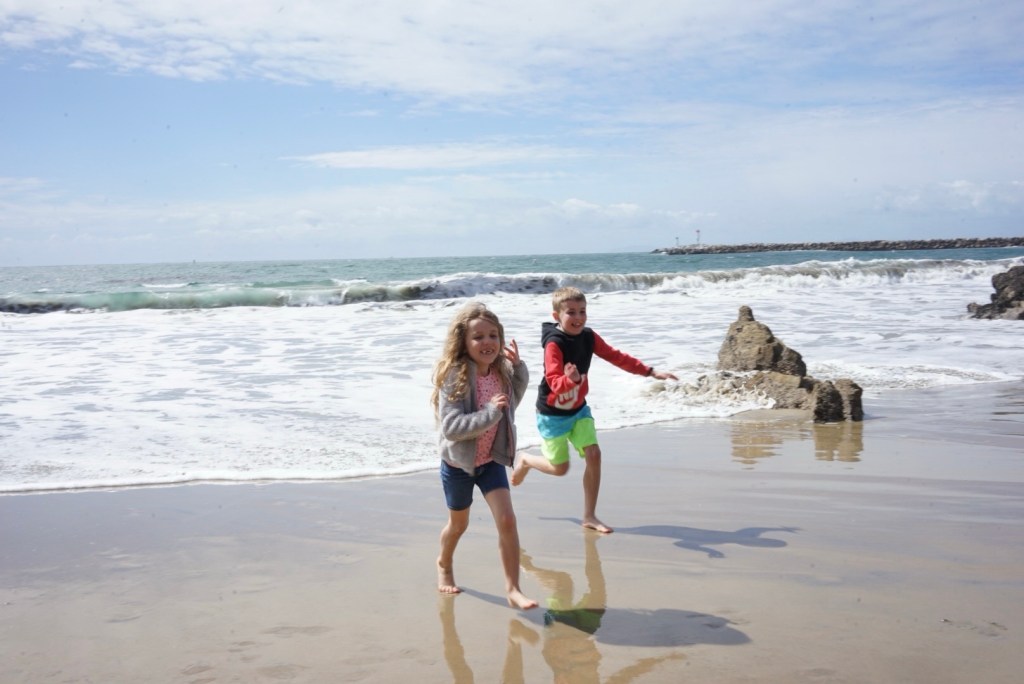
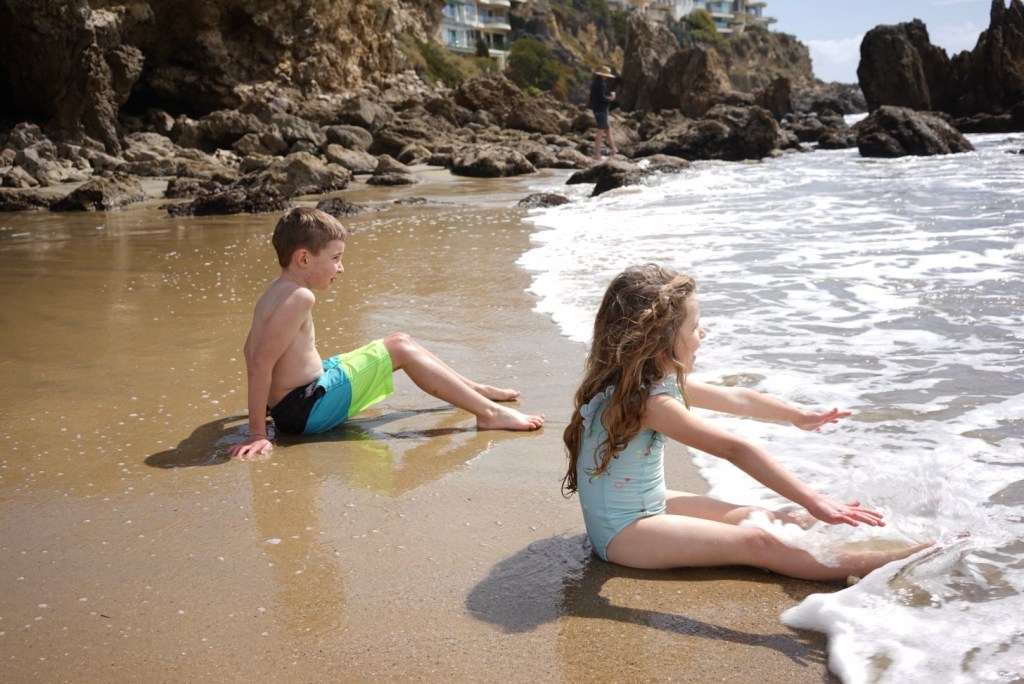
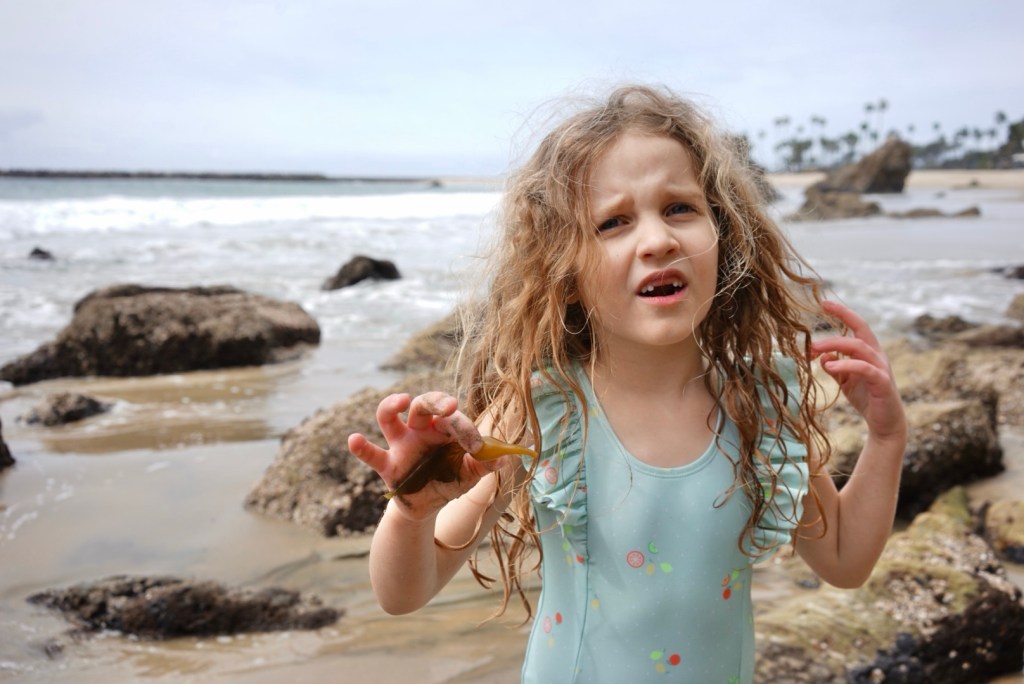
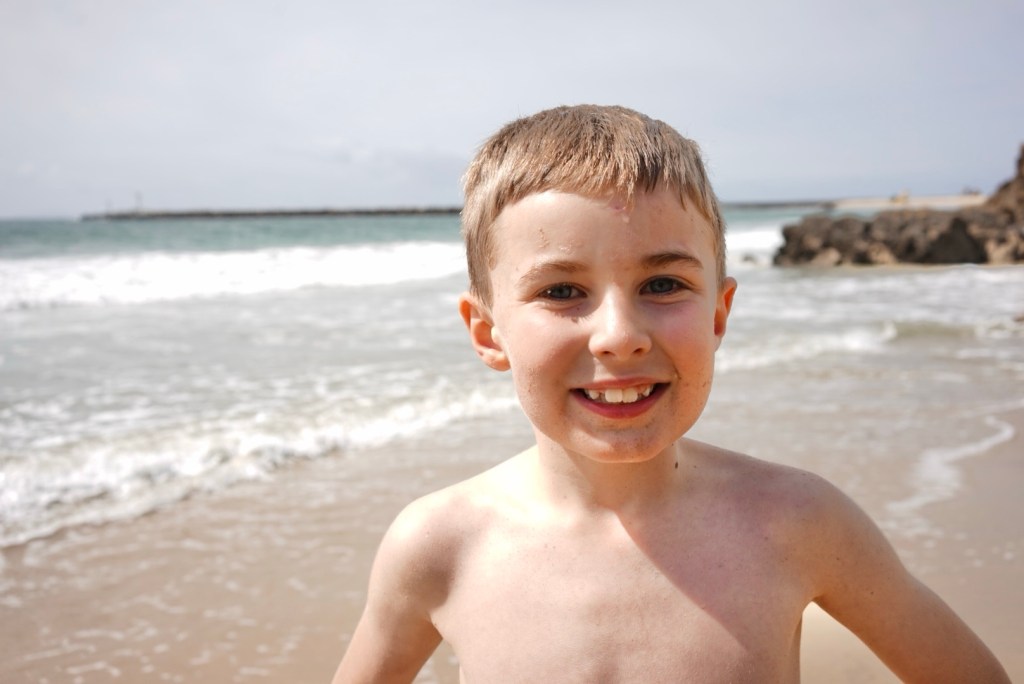
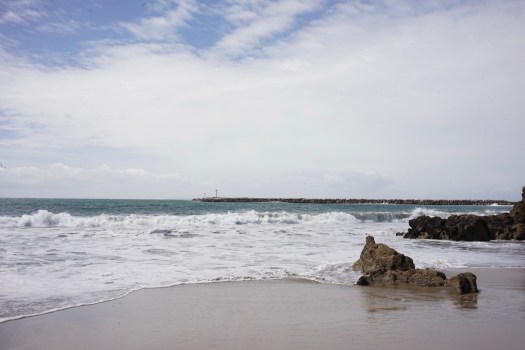
As soon as we arrived, uninhibited by the 50 degree weather and biting wind chill, Harrison and Poppy raced toward the ocean with full abandon. Joyous screams filled the air as they played a game of tag with the ever-crashing and receding waves. What I expected to be a โ€œdip our feet in the waterโ€ experience turned into a full plunge as the kids stripped down to their bathing suits and allowed themselves to be pummeled by the waves. The freezing water could not dampen their joy and their sense of awe in the presence of one of Godโ€™s masterpieces. 

For a full minute, I stood there with my toes in the sand and the biggest smile stretched across my face, fully immersed in the simple beauty of my kids experiencing the ocean for the first time. And then, I wept. I wept over the one piece missing from this idyllic scene that would forever be seared into the โ€œfamily memoryโ€ file of my brain: Shep. 

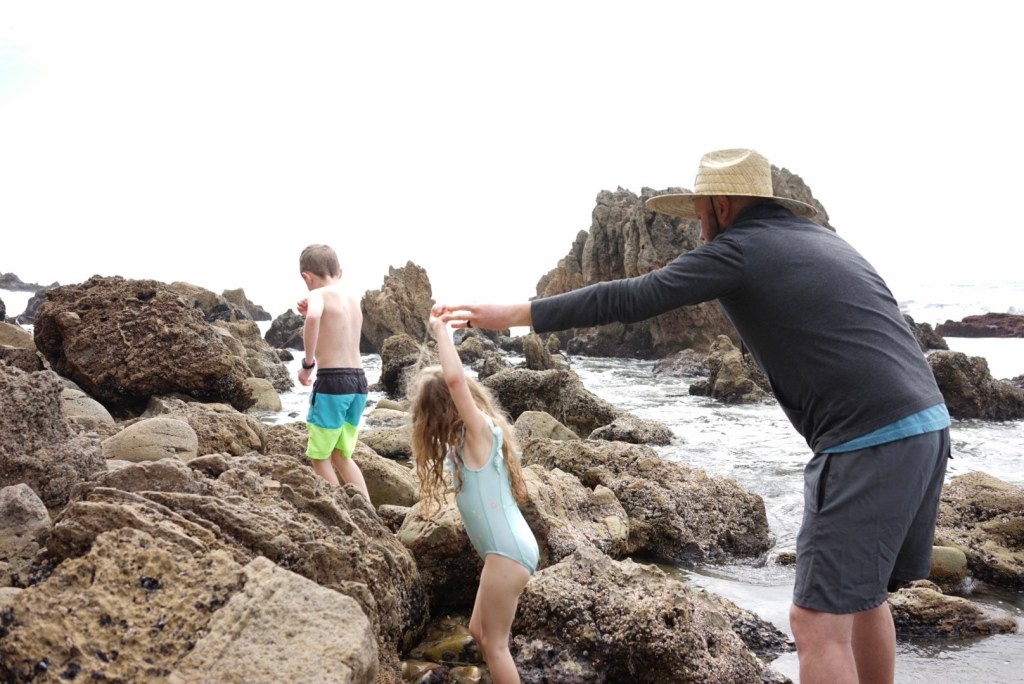
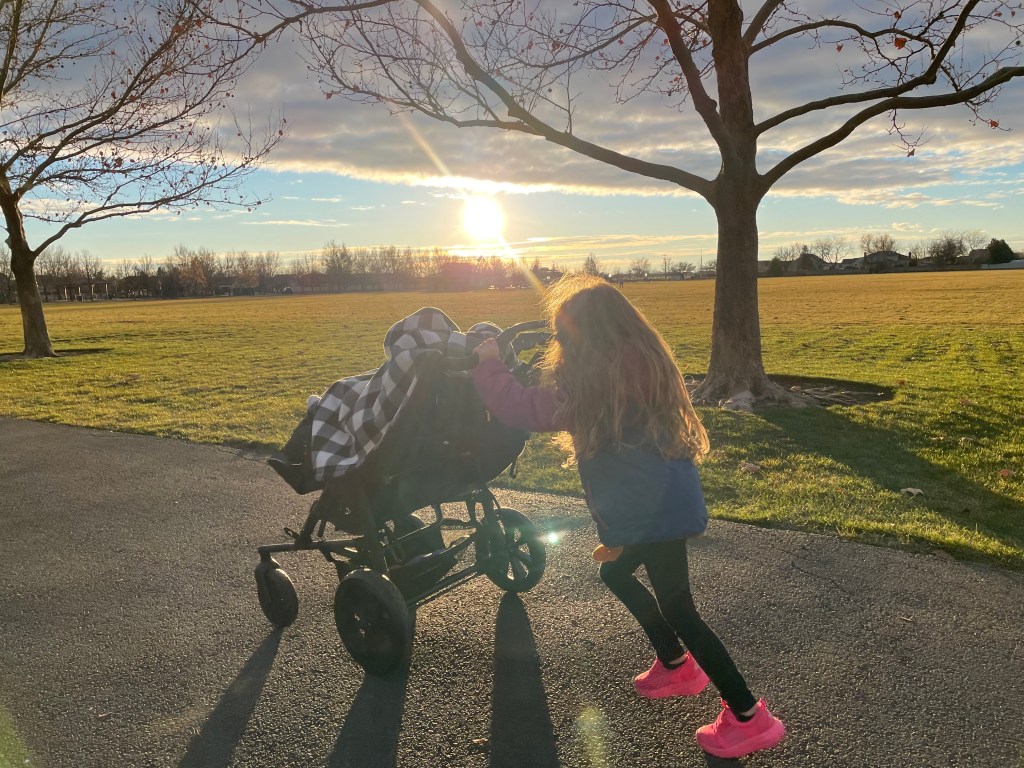
We had planned to leave Shep at the house with my parents, knowing our plans for the day just wouldnโ€™t be accessible for Shep. We specifically headed to Corona Del Mar Beach so the kids could kick off their ocean science unit for school by exploring the tide pools and the sea life that makes its home there. As we walked down the incredibly steep slope leading to the shore, it confirmed our hunch that we would not have been able to safely push Shepโ€™s heavy adaptive stroller up or down it. Not to mention, his stroller is not suited for being pushed through dry, unpacked sand. We would have been unable to climb over jagged, uneven rocks searching for hermit crabs and sea snails and gently poking the sea anemone. The beach experience we wanted Harrison and Poppy to have simply would not have worked for Shep. We knew this was true, and yet, as I stood watching my older two children frolicking through the waves, I was overcome with grief that Shep was not there with us.

Without a word spoken, I could tell my husband was experiencing the same conflict of emotions as I was. On the drive home, we talked about how our sadness was not just that Shep couldnโ€™t have joined us for some modified, adaptive beach experience; we felt the old ache of wishing he couldโ€™ve been there experiencing the beach in the same way his siblings got to. We longed to watch him run into the sea and have it chase him back out. We desperately wanted to hear his laughter and have him voice his awe-struck thoughts about the wild vastness of the ocean. We wished he could climb rocks like four-year-old boys do and yell with elation when he stumbled across a skittering crab. We wanted our day at the beach to be what ordinary families experienceโ€” joy. Without grief. 

Our bittersweet day at the beach left my brain lingering over the word โ€œaccessโ€ and the implications it has on our everyday lives. Access is something most of us never even consider until weโ€™ve had ours denied in some way. Having a disabled son has changed how I view the world in this regard. Spontaneity is replaced by meticulous planning and preparation before any outing with a disabled loved one. Heavy doors, uneven terrain, staircases, crowded places, and narrow walkways are all to be considered when you are navigating life with a wheelchair.  And this is simply looking at accessibility through a lens of physical disabilities. Having true access to something is also affected by cognitive disabilities, communication limitations, sensory processing issues, etc. For the disabled community, access almost always requires a modified experience. And when sufficient modifications cannot be made, it means missing out and sitting on the sidelines of life. 

Shep did not have access to the beach day our family experienced. The rest of our family, without a second thought, walked down a steep hill, onto the sand, into the water, and up and over rocks. Barriers and obstacles made it such that Shep had no means of approaching the beach the way we did with his limited physical abilities and the equipment we currently have for him. Inaccessibility is a heartbreaking reality in Shepโ€™s life that naturally leads to separation and missed opportunities. 

While most of us have not experienced the sting of inaccessibility due to physical limitations, Ephesians chapter 2 speaks of a different type of barrier we all faceโ€” our inherent separation from God. Verse 12 describes how, because of our sin, we were โ€œseparated from Christ . . . having no hope and without God in the world.โ€ Faced with the insurmountable barrier of perfectly keeping Godโ€™s law, we were denied access to God and to hope. Sin is the universal disability that prevents us from truly approaching God. 

BUT the chapter goes on to say, โ€œBut now in Christ Jesus you who once were far off have been brought near by the blood of Christ . . . through him we both have access in one Spirit to the Fatherโ€ (Ephesians 2:15, 18). Friends, Jesus broke down the barrier we could not climb by living the perfect, sinless life we never could and exchanging our guilt for His righteousness. Jesus is our access. By His blood, we are made right with God, and we gain not only a relationship with Him, but also the hope of Heaven. I canโ€™t think of a single thing that would be more devastating to miss out on than this. 

As sad as it is that Shep will not have access to every place and experience here on earth, that pales in comparison to the tragedy of not having access to our God who loves us. Iโ€™m so thankful for the price Jesus paid to make a way for me to have a relationship with my loving Father here on earth and a future in Heaven with Him. There, He will make all things new and whole. We will no longer be bound or hindered by the things that hold us back now and sadness will be no more. Man, do I long for Heaven. I canโ€™t wait to get there and take my Shep to the beach. 

A POPPY KIND OF LOVE

My husband, Daniel, and I worried about bringing another baby home when Shep came along. Our middle child, Poppy, was not even 2 yet and she was still very much a baby herself in many ways. She was emotionally needy and required so much attention. We fully expected her to NOT transition well to having another baby around.

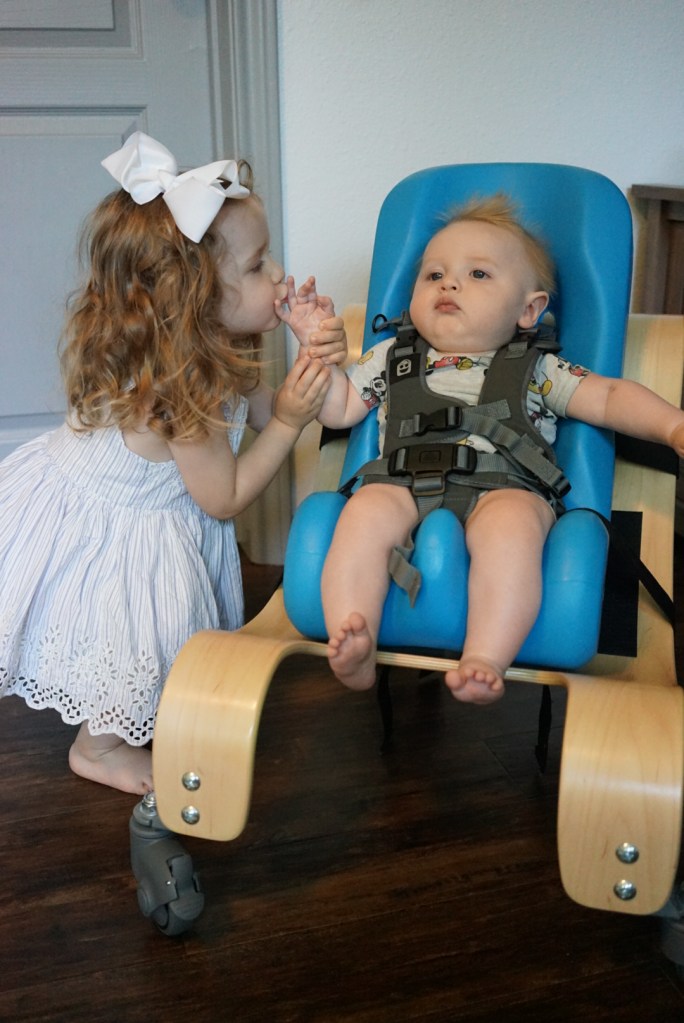
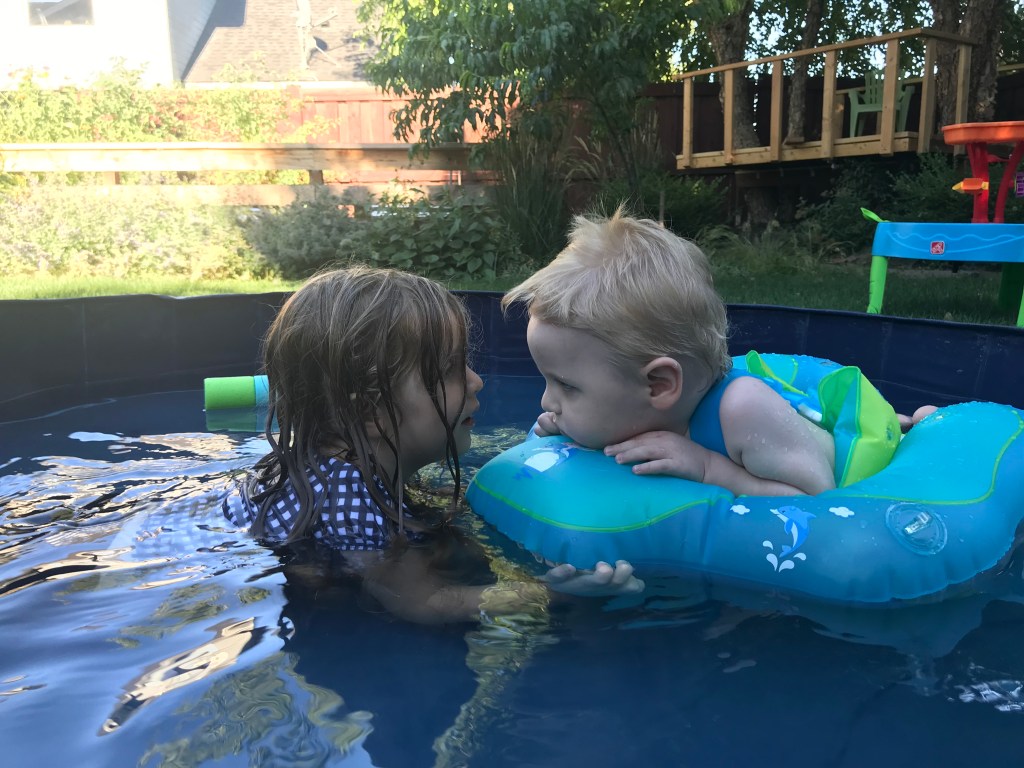
To say Poppy proved us wrong would be an understatement. This video was taken when Shep was just weeks oldโ€”in the very short season of his life that we were blissfully unaware of how disability was about to rock our world. From day one, Poppy has nurtured and cared for Shep without any prompting. She has never been deterred by his crying or fussiness, but rather, pushes in to try to soothe him. She gets a different look on her face when sheโ€™s with Shepโ€”one of pure, unconditional love and adoration. I can see it in this video and I still see it today. 

Poppyโ€™s affection for Shep did not stop when he started missing milestones. Or when we put him in clunky and foreign pieces of adaptive equipment for the first time. It didnโ€™t stop as she sat through countless hours of therapy with him. Or when she began explaining to people, โ€œhe has a disability and he canโ€™t talk so he wonโ€™t answer you backโ€ without skipping a beat. It didnโ€™t stop when we received his diagnosis and realized heโ€™d never be the little brother we thought sheโ€™d have.

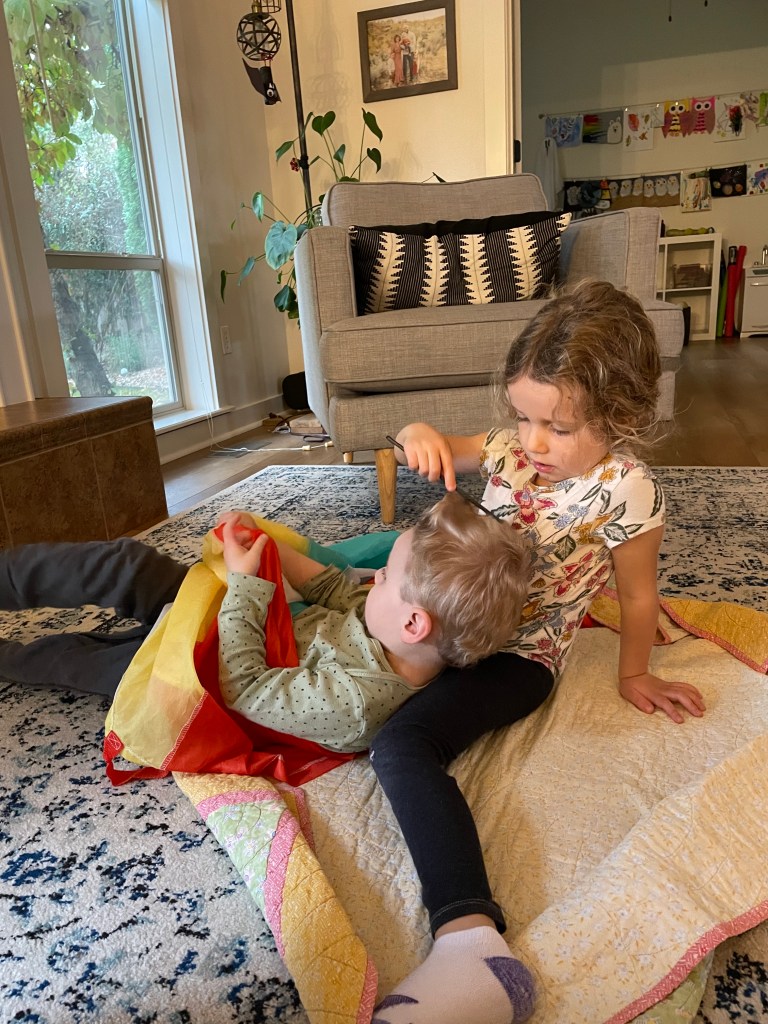
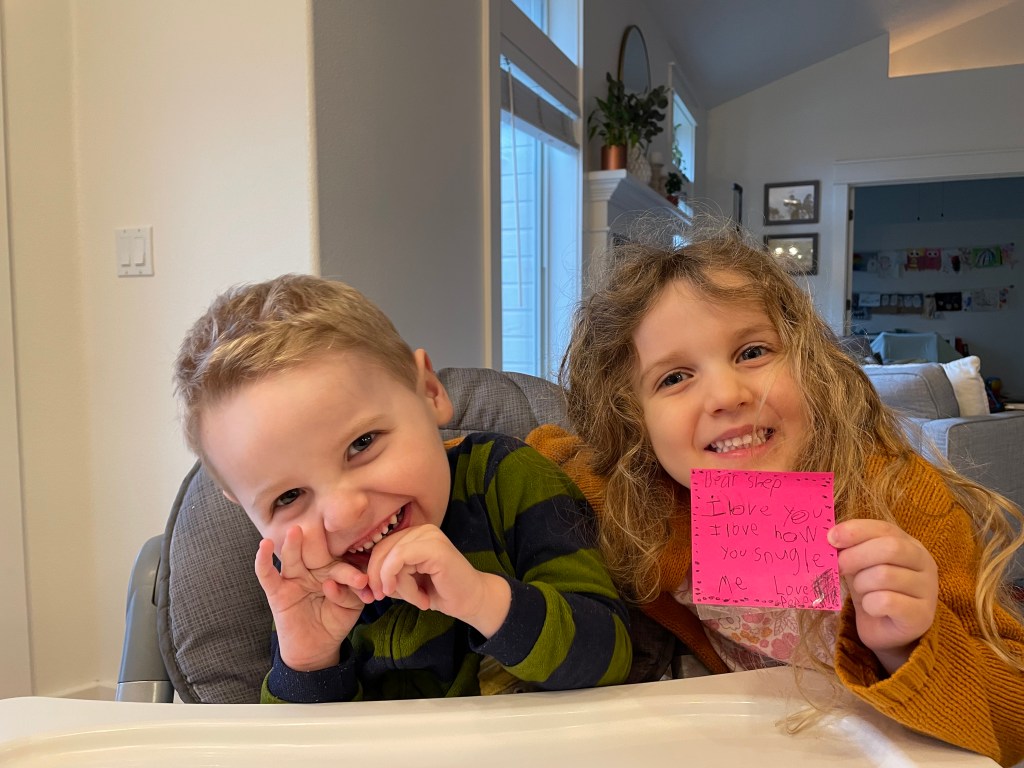
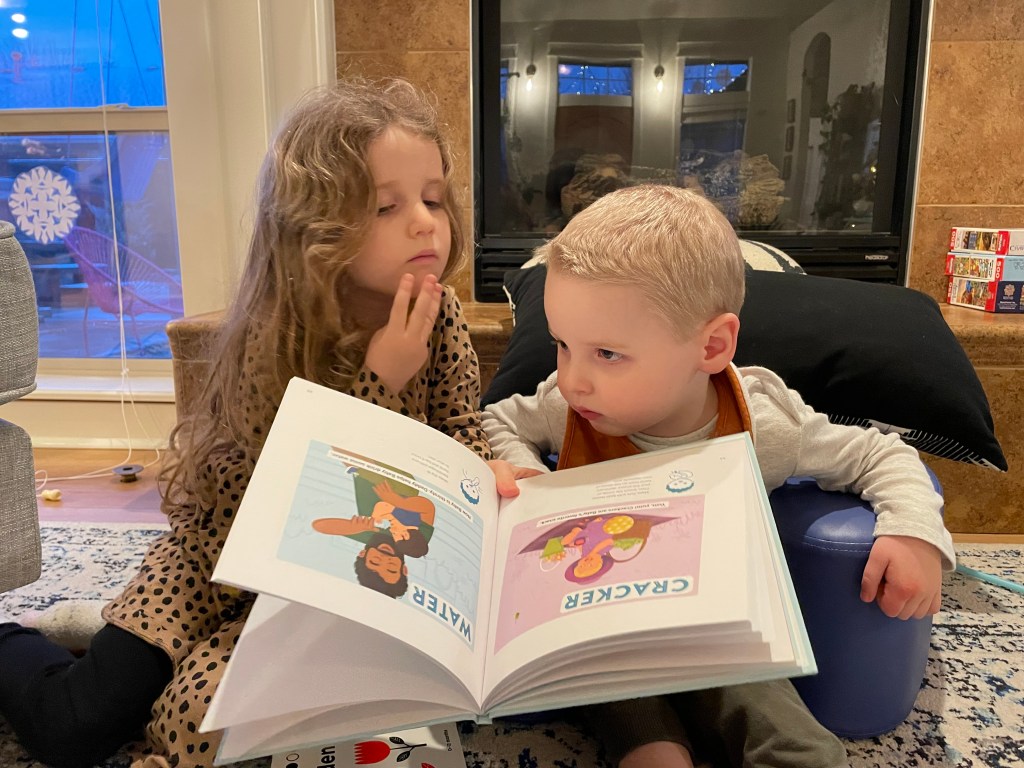
Poppy still smothers Shep with hugs and kisses. She snuggles him, combs his hair, and writes him little love notes just because. Poppy reads books to Shep and sings โ€œJesus Loves YOUโ€ when heโ€™s sad. She plays games with Shep and responds to him as if he had said something aloud to her. She protects him, helps him, and includes him. She โ€œgets himโ€ better than anyone else. I believe God hand-crafted Poppy for Shep. She is well aware of his disability, but isnโ€™t phased by it in the slightest. To her, heโ€™s just Shep. Heโ€™s not a problem to be solved, a broken person to fix, or a case for pity. Heโ€™s simply loved. Poppy is the puzzle piece that makes Shep fit in with a world unfit for him.

In a way, it feels like Poppy has always known (better than we have) who Shep is and who he would be and she loves him all the same. Isnโ€™t this the way God loves us? 

Psalm 139 is an ode to this very idea. The psalmist, David, begins with, โ€œO Lord, You have searched me and known me! You know when I sit down and when I rise up; you discern my thoughts from afar. You search out my path and my lying down and are acquainted with all my ways. Even before a word is on my tongue, behold, O Lord, you know it altogetherโ€ (verses 1-4). He continues to describe how, from the womb, God intimately knew and intricately designed every part of us (verses 15-17). In short, God knows us better than we even know ourselves. He knows all our hopes, dreams, talents AND our flaws, failures, heartless deeds, and impure thoughts. Yet, He loves us all the same. Through a series of rhetorical questions, in verses 7 through 11, David drives home the point that there is nowhere we could go or nothing we could do that would ever separate us from Godโ€™s presence and His love. In the book of Romans, the apostle Paul echoes this point when he says, โ€œAnd I am convinced that nothing can ever separate us from Godโ€™s loveโ€ (Romans 8:35a, NLT). 

Is this not the deepest desire of every human heartโ€”to be fully known AND fully loved? The beautiful display of love I see between my daughter and my youngest son merely scratches the surface of the depths of Godโ€™s love for me and for you. I am fully knownโ€”in all my brokenness and imperfectionโ€”and fully, deeply loved. And so are you, my friend. There is no greater love than this.

LAZARUS

One of the common mistakes I see hurting people make is rushing the process of pain and being all too hasty to convince the world and themselves that theyโ€™re fine. Everything is fine. In the Christian community, we tend to offer hopeful platitudes and plaster a forced smile on our faces. I like to refer to this as โ€œslapping a Jesus sticker on it.โ€ Weโ€™ve convinced ourselves that admitting hurt or grief somehow diminishes our proclamation of faith in a good God. 

While I will always point to Jesus and the hope I have in Him, I believe that acknowledging our pain, sitting with it a while, and opening up about it is not only healthy, itโ€™s biblical. Donโ€™t believe me? Read through the book of Psalms. Poem after poem written as laments โ€” giving shape to loss, pain, anguish โ€” universal parts of the human experience. God welcomed these psalms and the expression of pain because their writers were bringing their hurts to God, not turning from Him because of them. 

Jesus took on flesh to live a fully human experience like we do. Part of that experience meant encountering loss. In the gospel of John, we read the account of the death of Jesusโ€™s good friend, Lazarus. We also witness the rise and fall of Maryโ€™s and Marthaโ€™s (Lazarusโ€™s sisters) emotions as they sent word to Jesus for help when Lazarus got sick and were devastated when He arrived โ€œtoo lateโ€ to save their brother. Little did they know that Jesus came to conquer death and was about to raise their beloved brother from the grave. However, the Bible tells us โ€œwhen Jesus saw [Mary] weeping, and the Jews who had come with her also weeping, he was deeply moved in his spirit and greatly troubled . . . Then Jesus wept.โ€ (John 11: 33, 35). 

Jesus knew the end of the story. He knew Lazarus was not going to stay in that grave. He was full of hope and held the very keys to that hope. Yet, He too, wept.  In that moment, Jesus acknowledged the sting of death, loss, and grief. He wept not only over the death of His friend, but possibly more so for the anguish Lazarusโ€™s death left in its wake. Jesus stepped into Maryโ€™s and Marthaโ€™s agony and sat with them in their pain. He didnโ€™t say, โ€œGet it together girls! Itโ€™s going to be fine. Itโ€™s all going to work out, youโ€™ll see!โ€ Jesus knew the good that was to come but still gave grief its moment. I imagine Him pulling Mary and Martha into a warm embrace, weeping with them, and not rushing this moment because He was showing them that He was there with them through it all, the highs and the lows. 

I have felt Jesus do the same for me. I have wept on His shoulder more times than I can count. I know the end of the story. I know it is good. I know Jesus is victorious and I will see that fully realized one day. But, on this side of heaven, there is still loss. I take such comfort in knowing God sees me in my moments of pain and meets me there. I take comfort in the God who weeps with me. 

Below, Iโ€™ve included a piece I wrote in the spring of 2024 during a season of loss.  A seemingly small loss, but it represents one more layer of what disability has taken from us and it hurts. I share this with the hopes of encouraging you to not rush through your seasons of hurting. There is always hope. There will be brighter days. But Jesus is with you on the dark days too. 


Lazarus died today. 

Limb by limb, he was hacked apart. More like snapped apart. His brittle branches detached without protest, unceremoniously clattering to the ground like a pile of dry bones.

Only his trunk took some work. It was the only part of him that had any life left. Even then, the chainsaw sliced through over 20 thick rings of life in mere minutes. What once stood tall and mighty, now lay lifeless on the earth. 

Lazarus wasnโ€™t the only thing that died today. 

A little piece of childhood died, too. 

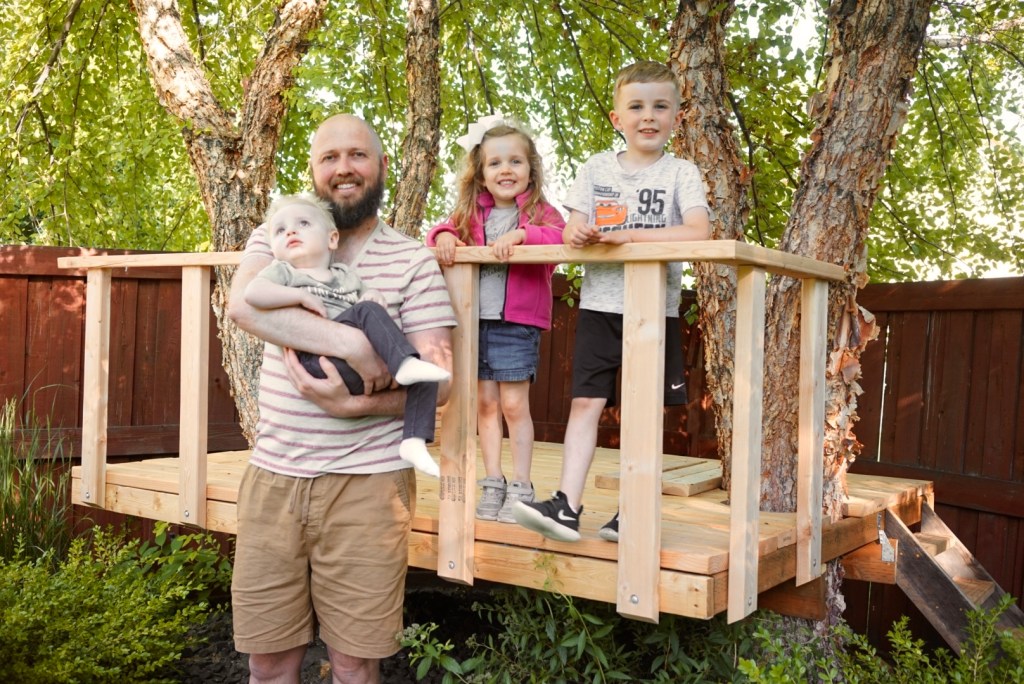
We left behind even more trees at our last home. Three whimsical River Birches and a sturdy Maple that stretched proudly toward the sky. The birches were home to a tree house that was home to the wild imagination of a little boy and little girl. The maple was the boyโ€™s favorite climbing tree. We left them all behind to find a home for another little boy who would never climb any trees. 

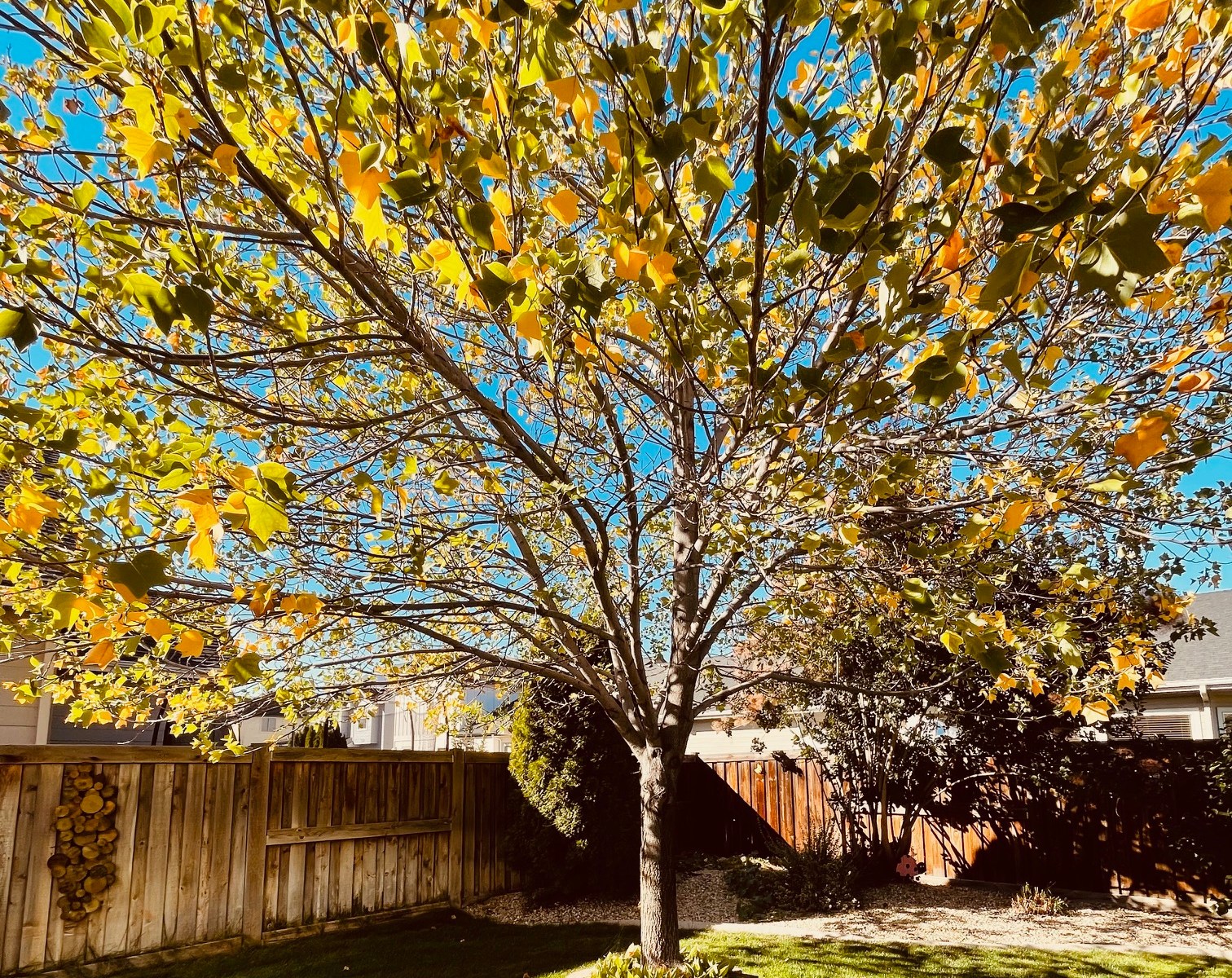
Our new home had Lazarusโ€”a tall old Tulip Tree with a spherical canopy. Our only hope. We learned he was sick right away. Barren branch after barren branch where luscious leaves should be. We named him Lazarus and started praying life over him. 

Mary and Martha waited four days for their Laz to return. We waited 400. But ours did not return to the land of the living. We made the call to let him go in peace. 

There would be no trees for my children to climb. No miniature wilderness to be explored by curious young minds. Lazarusโ€™s untimely departure only served to expedite fleeting seasons of childhood.  

Lazarus wasnโ€™t the only thing that died today. 

A small corner of paradise died too. 

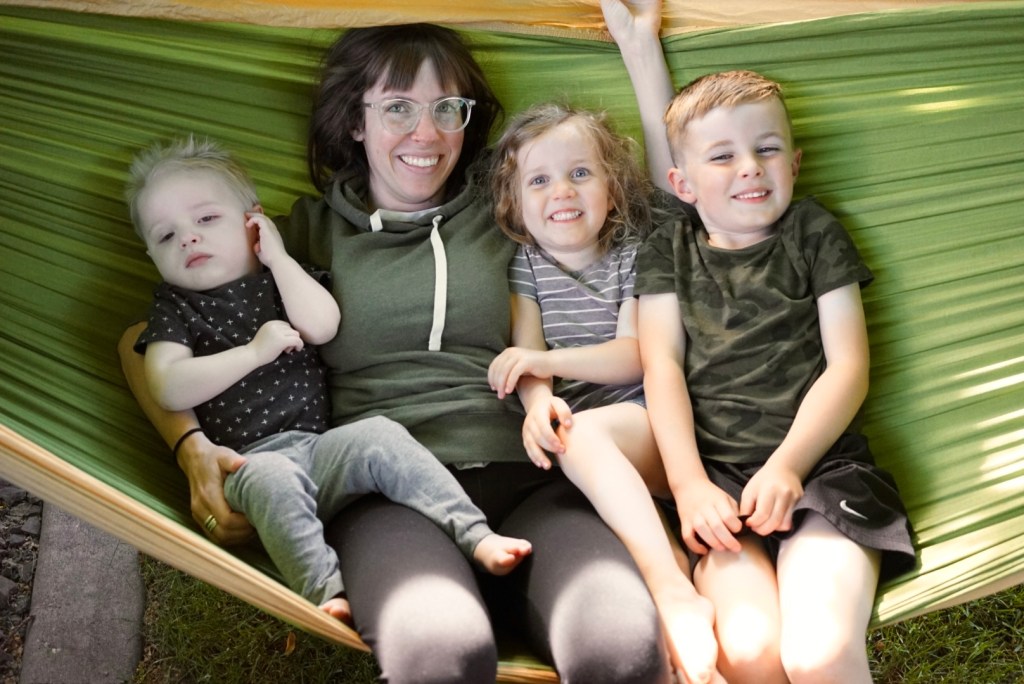
At our last home, the branches of the birches and maple touched, creating a perfect canopy of green. We hung a hammock between the two trees and rested in its embrace. Hours were spent thereโ€“swaying, snuggling, reading, laughing, crying, listening to the whisper of wind as it rustled through leaves. That very spot, perfectly shaded in every season shielded us from the sun, but also from lifeโ€™s burdens. Our peace banana, as we called it, strung between two majestic trees, was solace for the weary. Respite in the midst of shattering pain. 

Our new home had only Lazarus to fill that void. Half of what was needed to recreate our slice of paradise. We settled for using an awning post where a second tree should be. We swung in our hammock beneath a sparse canopy that scarcely filtered the beating sun and tried not to think of what we left behind. And now, even Laz is gone. Our paradise is lost. 

We are planting a new tree in Lazโ€™s place. A baby. Young, but full of promise. One day, Iโ€™ll write about how the Sienna Glen reaches to the heavens. And how its leaves shade our yard in summer and burn like fire in fall. One day, Iโ€™ll write about how its limbs give my grandchildren a place to climb and play. 

But not today. Today I remember and honor what had to die to make room for new life.

ROME

As Christmas draws near, my thoughts are drawn to the very first Christmas and how Jesus was received by a world desperately awaiting His arrival, yet caught so off guard by the humble form He took. 

Israel had long been awaiting their promised Messiahโ€”their savior. Yet, confusion seemed to remain about what exactly they were being saved from. The Israelites were no strangers to hardship throughout their nationโ€™s history as they endured slavery, war, captivity, and oppression at the hands of other nations. At the particular time Jesus made His earthly appearance, Israel was being occupied by Rome and the Jewish people were groaning under the weight of Romeโ€™s rule and the imposition of their laws and taxes. So naturally, the Jews living at this time were hoping/expecting that the Messiah would come to deliver them from their current greatest enemy: Rome. 

Every year around this time, I hear fellow Christians make comments along the lines of โ€œI donโ€™t know how they could have missed Him! They were waiting for the Messiah. Jesus came! He fulfilled countless prophecies. How on earth did they not see it?โ€

And with the privilege and perspective of hindsight, I have thought along those same lines. I can hold up the accounts of Jesusโ€™s life, death, and resurrection and see how He was a perfect match to details that were foretold about Him hundreds of years prior, and there is no doubt in my mind that Jesus is the long-awaited Messiah. 

However, this year Iโ€™ve placed myself back in that setting over 2,000 years ago and imagined how I would have responded to Jesusโ€™s arrival if I were alive at that time. And for the first time, I get it. I can see how so many missed itโ€”how they missed Jesus. He was not who they were expecting. 

The Jews were expecting a conquerorโ€”a mighty military leader who would come and overthrow Rome, delivering them from their hardships and suffering. In their defense, God had acted in this manner on behalf of His people many times in the pastโ€”delivering them from slavery in Egypt, defeating their enemies in battle time and time again, leading them by a mighty hand into the Promised Land and showing them unmerited favor. So why wouldnโ€™t they expect God to move in the same way again?

Nine months before Jesus came to earth, an angel of the Lord appeared to a virgin named Mary and her scared fiance and told them Mary would bear a son. The angel said, โ€œyou shall call his name Jesus, for he will save his people from their sinsโ€ (Matthew 1:21). 

The two people who ushered Jesus into this world were made privy to the very reason He cameโ€”to save people from their sins. Jesus would go on to deliver this same message throughout His earthly ministry. Jesus didnโ€™t come to overthrow Rome. He came to save His people from their true enemyโ€”their own sin that separated them from God. 

The burden of Romeโ€™s rule would remain for the Jews. And for the followers of Christ, conditions would continue to worsen as the early church faced immense persecution. I imagine those early believers couldnโ€™t help but feel disappointed that their savior hadnโ€™t actually come to save them from what they saw as their greatest hardship in life. But God knows that what plagues us on earth is only temporary, while separation from Him is eternal. Thus, our sin truly is our greatest enemy.  

I similarly have imposed my expectations on God and tried to form Him into the savior I had expected and hoped for Him to be. As a mother of a child with special needs, disability is my Rome. I understand what it feels like to live under a daily burden of hardship. Disability means inconvenience at best, heartbreak at worst. Being a caregiver for a disabled loved one is taxing on body, mind, and soul. As the Jews did, I long for God to overthrow the Rome in my life and free me from the anguish it causes me daily. I too have wrestled with disappointment when my expectation for God to defeat โ€œmy greatest enemyโ€ has gone unmet.

However, Godโ€™s word reminds me that the trials and struggles I face in life are a โ€œlight and momentary affliction [that] is preparing for [me] an eternal weight of glory beyond all comparisonโ€ (2 Corinthians 4:17). My Rome wonโ€™t last forever, but my standing with God will.

Jesus didnโ€™t come to earth to give me an easy life. He came to defeat my sin on the cross and make a way for me to be called a friend of God. Because of this, I can have hope in the midst of my temporary circumstances and eagerly wait for Christโ€™s return, where โ€œRomeโ€ no longer has any power over me.  

Be encouraged, friend, as the same is true for you. Jesus is calling you to Himself and longs to defeat your greatest enemyโ€”sinโ€”so you can live with hope and joy regardless of the Rome you are facing today.